
Volatility vs. risk
Volatility is how much returns bounce around. Permanent risk is the chance you do not meet your goal, often about behavior, concentration, and liquidity.
Basics
Short primers for clients and prospects. Educational only, not a recommendation or personalized advice.
Concepts in pictures
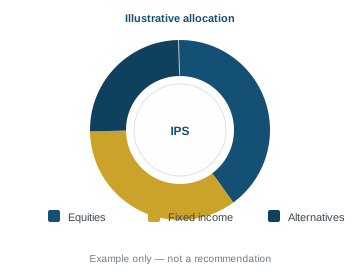
These diagrams explain ideas, not what you should own. Your allocation depends on your plan, constraints, and agreement with your adviser.


Volatility is how much returns bounce around. Permanent risk is the chance you do not meet your goal, often about behavior, concentration, and liquidity.
Spreading across asset classes and drivers can reduce idiosyncratic risk; it does not guarantee profits or remove market risk.
Expense ratios, trading costs, and taxes compound over decades. Implementation should be deliberate, not accidental.
Nominal returns ignore what a dollar buys. Planning often anchors to real (inflation-adjusted) outcomes where possible.
Money needed soon generally belongs in more stable, liquid sleeves; long horizons can absorb more equity risk if appropriate.
Systematically trimming winners and adding to laggards (within policy) enforces discipline, it is not market timing.
Expand this section with your compliance-approved articles, PDFs, or links to regulator investor tools.
Education is part of how we work, not a substitute for personalized advice. Reach out for a conversation about your situation and our process.
Contact us